

Alberta zero tolerance laws for young drivers set one clear standard. If you hold a Class 7 learner’s licence or a Class 5-GDL probationary licence, you must drive with no alcohol and no impairing drugs in your system. There is no lower limit to stay under. Any detectable amount can lead to an immediate roadside sanction.
At Ziv Law Group, our Edmonton DUI defence firm led by Rory Ziv often deals with questions about this rule. Teens wonder whether one drink counts. Parents ask about cannabis the night before. Many drivers never think about cold medicine or a prescription.
In this article, we explain who the rule covers, what it means in practice, what penalties may follow, and what to do after an IRS ZERO: Novice sanction. It is written for new drivers, parents, driving instructors, and anyone researching Alberta impaired driving rules after a roadside stop.
Please note: This article is general legal information, not legal advice. It does not address any individual situation. Rules and penalties change, so confirm current details through official Government of Alberta sources before you rely on them.
What Are Alberta’s Zero Tolerance Laws for Young Drivers?
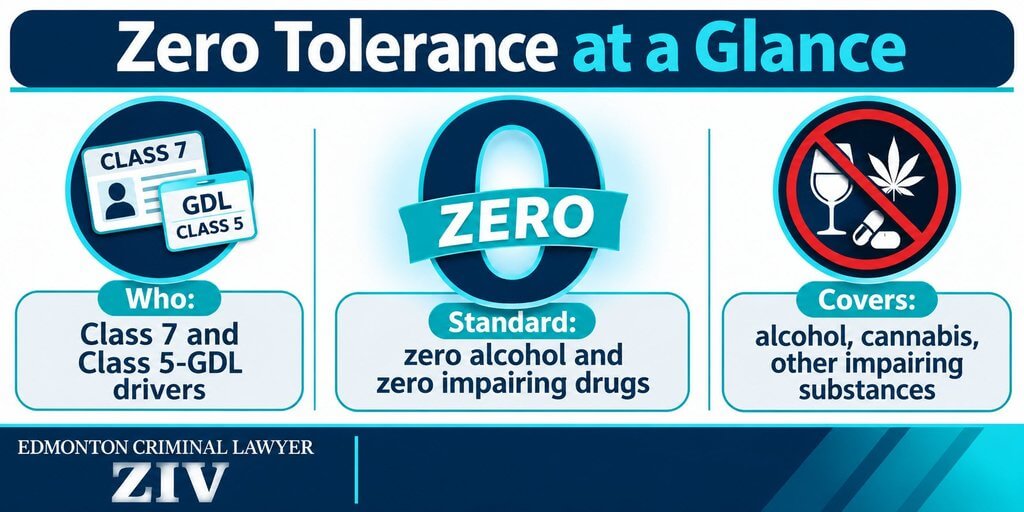
In plain language, the rule says a novice driver cannot have alcohol or impairing drugs in their body while driving. Alberta calls the related sanction program IRS ZERO: Novice. The Government of Alberta describes it as zero tolerance for any alcohol and drugs for drivers in the Class 7 learner’s or Class 5-GDL categories.
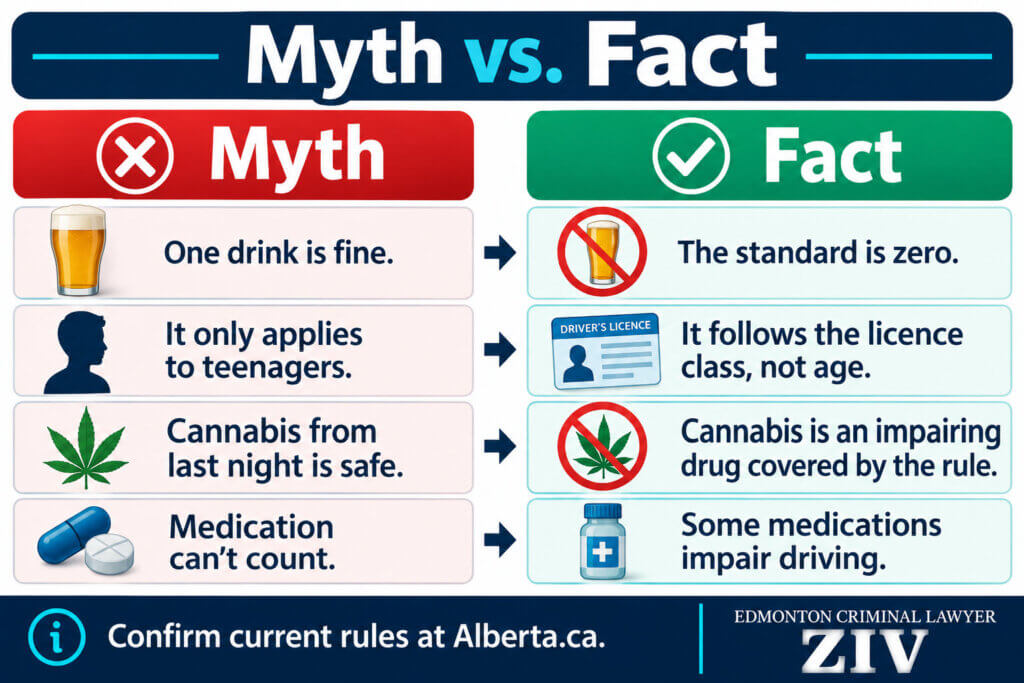
The rule follows the licence, not the birthday. A 35-year-old new immigrant to Alberta who holds a Class 5-GDL licence must follow the same standard as a 16-year-old. Age does not change who is covered. The licence class does.
“Zero tolerance” does not mean “a very low limit.” It means no detectable alcohol or impairing drugs. A driver cannot aim for a small amount and expect to stay safe under the rule. This is the core idea behind Alberta zero tolerance laws for young drivers, and it separates the novice standard from the rules that apply to experienced drivers.
Who Must Follow the Zero Tolerance Rule?
Alberta uses Graduated Driver Licensing (GDL) to bring new drivers into full driving privileges in stages. Stage one is the Class 7 learner’s licence. Stage two is the Class 5-GDL probationary licence. Alberta’s licensing policy sets a minimum of 12 months at the Class 7 stage and 24 months at the Class 5-GDL stage. A driver must also stay free of suspensions and traffic contraventions during the last 12 months of probation before moving to a full Class 5 licence.
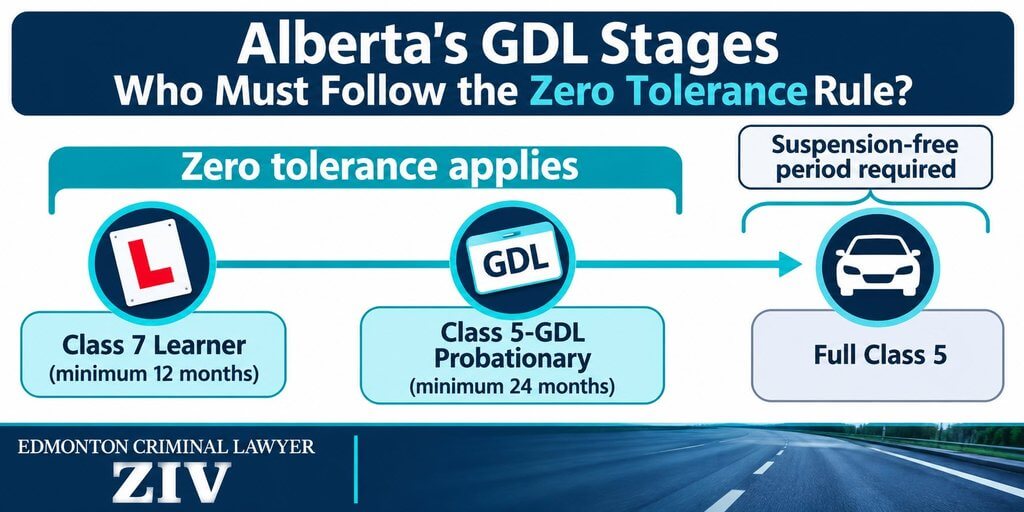
Class 7 learner zero tolerance and Class 5-GDL alcohol rules apply throughout both stages. The table below compares them with a fully licensed Class 5 driver.
Who Is Covered by Alberta’s Zero Tolerance Rule?
| Licence type | Driver status | Alcohol/drug limit while driving | Key point |
| Class 7 | Learner (stage one) | Zero. No detectable alcohol or impairing drugs. | Applies at any age while you hold the learner’s licence. |
| Class 5-GDL | Probationary (stage two) | Zero. No detectable alcohol or impairing drugs. | Applies for the whole probationary period, which has a 24-month minimum. |
| Class 5 (full, non-GDL) | Fully licensed | The IRS ZERO: Novice rule does not apply. | Impaired driving remains illegal, and other sanctions and Criminal Code charges can apply. |
What Does “Zero Tolerance” Actually Mean?
Zero tolerance covers three broad categories: alcohol, cannabis, and other impairing drugs. Alberta’s policy language focuses on whether a driver has any detectable amount of alcohol or drugs while driving. The question is not only whether the driver felt fine.
Alcohol
Impairment can begin with the first drink. Body size, food, timing, and other factors all change how alcohol affects a person, and no one can reliably measure it by feel. For a novice driver, guessing is the wrong strategy.
Cannabis
Cannabis is an impairing drug and falls within the rule. Drivers sometimes assume that using it hours or a day earlier makes driving safe. The effects and timing vary from person to person, which is one more reason the safest plan is to keep cannabis use and driving completely separate.
Other Drugs and Medication
Some prescription and over-the-counter medications can cause drowsiness, slowed reactions, or poor focus. The risk rises when a medication combines with alcohol or another drug. Read the label, and ask a doctor or pharmacist whether you can drive safely. MyHealth.Alberta.ca offers health information you can check alongside that advice.
The next table shows how the novice standard compares with the standard for fully licensed drivers. We have left out blood-alcohol numbers for fully licensed drivers on purpose, because those figures belong with official Government of Alberta sources.
Novice Drivers vs. Fully Licensed Drivers
| Driver category | Alcohol/drug standard while driving | Practical meaning | Potential consequence if the rule is breached |
| Novice (Class 7 or Class 5-GDL) | Zero. No detectable alcohol or impairing drugs. | Any amount can trigger the rule, so there is no safe amount to aim for. | IRS ZERO: Novice sanction, which can include a 30-day licence suspension, a seven-day vehicle seizure, and a fine plus victim fine surcharge. |
| Fully licensed (Class 5) | Higher alcohol thresholds exist, but driving while impaired is always prohibited. | A driver can face consequences even below a numeric threshold if police believe impairment is present. | Other IRS sanctions or Criminal Code proceedings, depending on the facts. |
Penalties Under Alberta’s IRS ZERO: Novice Program
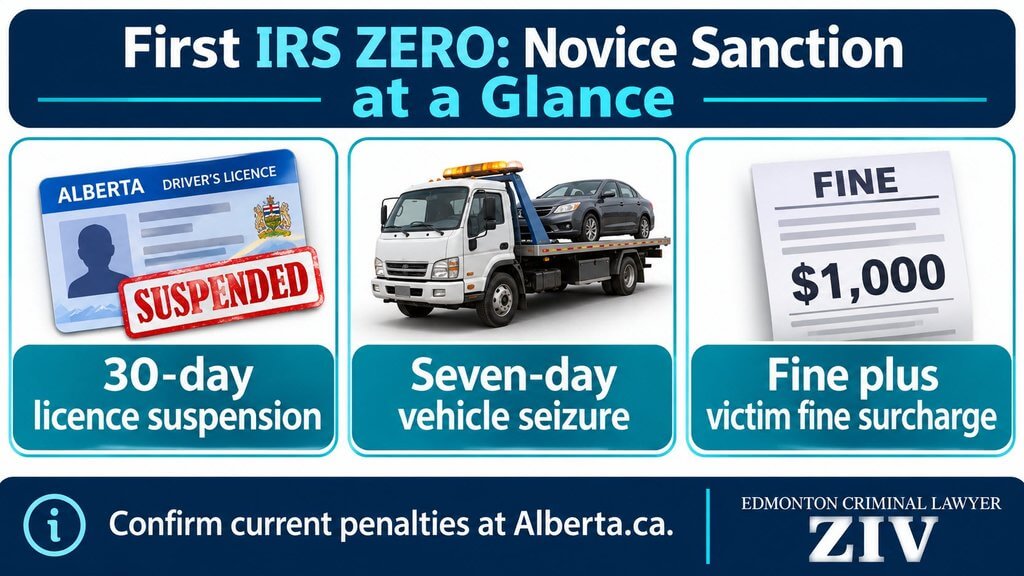
For a first IRS ZERO: Novice sanction, Alberta’s program imposes three main penalties, each described by the Government of Alberta:
- An immediate 30-day driver’s licence suspension.
- A seven-day vehicle seizure.
- A fine plus a victim fine surcharge. Alberta Transportation’s policy manual lists the fine as $200, with a 20 percent surcharge. Confirm the current amounts with the Government of Alberta.
The suspension takes effect immediately, and the driver cannot drive during it. The owner of the seized vehicle generally pays the seizure costs, and that owner may be a parent. Families should be ready for that possibility.
The suspension can also affect GDL progress. A driver moving from Class 5-GDL to a full Class 5 licence must be free of suspensions during the last 12 months of the probationary stage. A suspension during that window may delay the upgrade. Because Alberta changed some GDL requirements in recent years, check the current rules on Alberta.ca.
An IRS sanction is a provincial administrative process under the Traffic Safety Act. It is separate from Criminal Code impaired-driving proceedings. Depending on the circumstances, a driver may face an IRS sanction, a criminal charge, or both. In this article, we do not assess any specific case.
Important: An IRS ZERO: Novice sanction can have consequences beyond the roadside penalty. A driver may need to consider licence, insurance, school, work, and GDL-timeline effects.
Why Alberta Zero Tolerance Laws for Young Drivers Exist
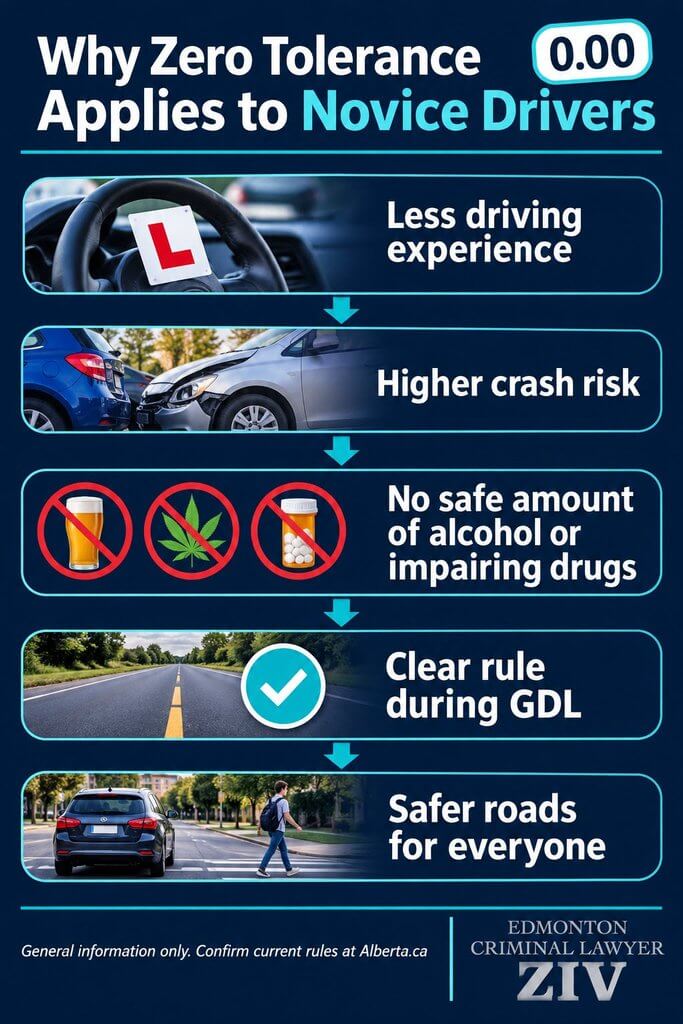
Alberta uses zero tolerance for novice drivers because new drivers have less experience. They are still learning to judge speed, distance, hazards, and road conditions. Alcohol and drugs reduce judgment, reaction time, and coordination. A driver with little experience has less room for those losses.
Graduated licensing exists to give new drivers time and structure while they build skill. A zero standard fits that purpose. It removes the guesswork. A young driver does not need to estimate how much is too much, because the answer during the learning and probationary stages is none.
Supporters of this approach see it as a simple, teachable rule. A clear line is easier for a teen to follow, easier for a parent to enforce, and easier for an instructor to explain than a numbers-based limit.
Common Situations That Can Lead to a Zero Tolerance Charge
These short scenarios are fictional and general. They show how the rule can come up in everyday life.
One Drink at a Party
A Class 5-GDL driver has one drink at a friend’s house and feels fine. At a roadside stop on the way home, police detect alcohol. Because the standard is zero, feeling fine does not change the rule.
Cannabis the Night Before
A learner driver uses cannabis one evening and drives to school the next morning. The driver assumes enough time has passed. That assumption is exactly the guess the zero standard asks novice drivers not to make.
Medication Side Effects
A new driver takes a cold remedy with a drowsiness warning and then drives. Even without alcohol, the medication may impair driving. Reading the label and asking a pharmacist can prevent this.
Riding with an Impaired Driver
A passenger who accepts a ride from a friend who drank puts their own safety at risk. The passenger is not driving, but the choice can lead to a crash. A passenger who holds a GDL licence should also think about the risk of being in a collision.
Misunderstanding the Rule
Some drivers believe the novice rule only applies to teenagers, or that it only applies after a certain number of drinks. Neither belief is correct. The licence class decides who is covered, and the standard is zero.
Checklist: “Before You Drive as a Class 7 or Class 5-GDL Driver”
- Confirm you have zero alcohol or drugs in your system.
- Check your medication labels and ask a doctor or pharmacist about driving effects.
- Arrange a sober driver before you go out.
- Avoid riding with an impaired driver.
- Know how you will get home safely, and keep emergency contacts and a backup ride option on your phone.
What To Do After an IRS ZERO: Novice Sanction
A sanction can feel overwhelming at the roadside. A calm, organized response helps. These steps are general, not advice for a particular case.
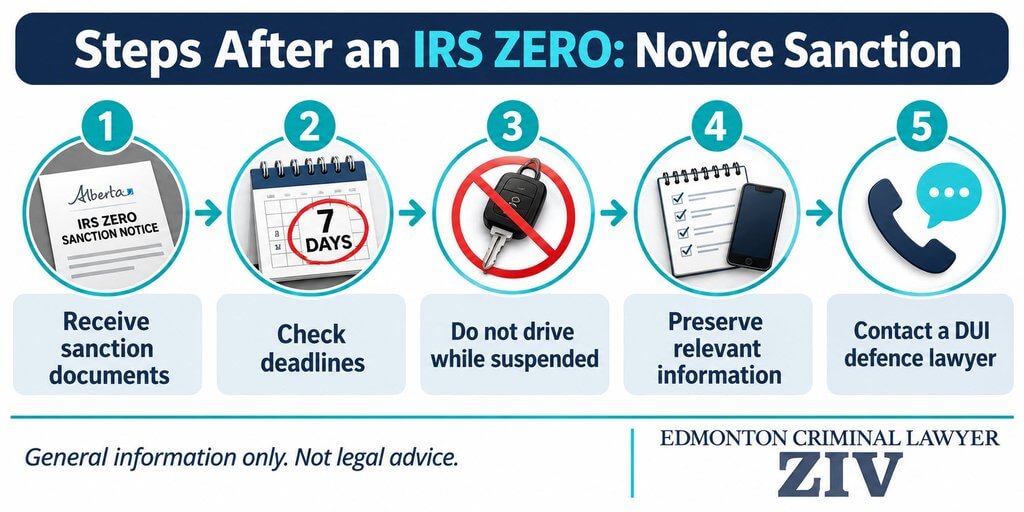
Read the documents carefully: The Notice of Administrative Penalty explains the sanction, the dates, and the review process. Keep every page.
Note the deadlines: Alberta states that a driver has seven days from the notice date to request a review of an IRS sanction. A late review may be possible in limited circumstances, but it is not guaranteed. Do not wait.
Do not drive while suspended: Driving during a suspension can bring serious additional consequences, including a longer vehicle seizure under Alberta’s suspended-driver program.
Preserve relevant information: Write down the time, location, and what happened while the details are fresh. Keep receipts, messages, medication records, and contact details of any witnesses.
Get legal advice promptly: A lawyer can explain the notice, the review process through SafeRoads Alberta, and how the sanction may interact with any Criminal Code allegations. A review may be available, but no one can promise a successful outcome.
Rory Ziv and Ziv Law Group can review the circumstances, explain available options, and represent drivers facing DUI-related allegations or sanctions in Edmonton.
Need to talk it through? If you or your child received an IRS ZERO: Novice sanction or faces an impaired-driving allegation in Edmonton, contact Rory Ziv at Ziv Law Group for a confidential consultation. Contact Ziv Law Group today.
Frequently Asked Questions
What are Alberta’s zero tolerance laws for young drivers?
Alberta zero tolerance laws for young drivers require anyone with a Class 7 learner’s licence or Class 5-GDL licence to drive with no detectable alcohol or impairing drugs. Any detectable amount can bring an immediate IRS ZERO: Novice sanction.
Does the zero tolerance rule apply to Class 5-GDL drivers?
Yes. Alberta applies the rule to both Class 7 learners and Class 5-GDL probationary drivers. A driver stays covered until the licence becomes a full, non-GDL Class 5, no matter how old the driver is.
Can a learner driver have one drink before driving?
No. A Class 7 learner must have zero alcohol while driving, so a single drink can lead to an immediate sanction if alcohol is detectable. Plan a sober ride instead of guessing how long alcohol stays in your system.
Does cannabis count under Alberta’s zero tolerance rule?
Yes. The rule covers impairing drugs, including cannabis. A novice driver must have no detectable drug in their system while driving, and cannabis can also impair driving. Avoid driving after any cannabis use.
What happens after a first IRS ZERO: Novice offence?
A first sanction carries an immediate 30-day licence suspension, a seven-day vehicle seizure, and a fine plus a victim fine surcharge. A suspension can also delay progress through the GDL program. Confirm current penalties with the Government of Alberta.
Can medication trigger Alberta’s zero tolerance rule?
It can. Some prescription and over-the-counter medications impair driving, especially with alcohol or other drugs. Read the label, ask a doctor or pharmacist whether you can drive safely, and do not drive if you feel drowsy or foggy.
Can a driver challenge an IRS ZERO: Novice sanction?
A review may be available through SafeRoads Alberta, and the driver generally must request it within seven days of the notice date. A review does not guarantee any result. Check your notice and consider speaking with a lawyer promptly.
When should someone contact a DUI defence lawyer?
Contact a DUI defence lawyer as soon as possible after a sanction or impaired-driving allegation, because review deadlines are short. A lawyer can explain the notice, discuss options, and help with any related Criminal Code matter.
How Ziv Law Group Can Help
Rory Ziv leads Ziv Law Group, which provides DUI defence services in Edmonton for drivers facing impaired-driving allegations and roadside sanctions. In general terms, the firm can help a driver or parent understand what a sanction means, review how the roadside stop unfolded, identify the options available, and respond to DUI-related allegations.

Every case turns on its own facts, so the first step is usually a conversation. The firm can explain the process, the deadlines, and the possible paths in plain language. Ziv Law Group does not promise dismissal, acquittal, or any specific result, and no reputable lawyer can. What the firm offers is careful review, clear explanation, and representation through the process.
Families often worry about the wider effects, such as insurance, school, work, and the GDL timeline. Raise those concerns early so they can be part of the conversation.
Key Takeaways on Alberta Zero Tolerance Laws for Young Drivers
Alberta zero tolerance laws for young drivers rest on a simple message. During the learner and probationary stages, drive with no alcohol and no impairing drugs. Plan your ride home before you go out. Check your medication labels. Never get into a car with an impaired driver. These habits protect you, your passengers, and your driving record.
If something does go wrong, act quickly. Read your documents, track your deadlines, and get advice.
If you or your child received an IRS ZERO: Novice sanction or faces an impaired-driving allegation in Edmonton, contact Rory Ziv and the Ziv Law Group 24/7 online or call our Edmonton office at 587-415-5786.
Note: This article is intended for general educational purposes and does not constitute legal advice. Every DUI case in Alberta depends on its own facts. Contact Ziv Law Group directly to discuss your specific situation.