

In a province characterized by vast distances and often inhospitable weather, possessing a valid driver’s license is not merely a convenience; it is a necessity. For most Albertans, relying on “alternative” modes of transportation is simply not a realistic option for maintaining employment, attending to family needs, or handling emergencies. The loss of driving privileges can quickly spiral into financial ruin.
In December 2020, Alberta introduced a significant shift in how impaired driving offences are handled with the implementation of the Immediate Roadside Sanction (IRS) Program. This administrative penalty system has fundamentally changed the landscape for drivers suspected of operating a vehicle under the influence of alcohol or drugs. Understanding how this program works, and more importantly, how you can challenge it, can make the difference between losing your licence for months or getting back on the road.
When you are stopped by police and issued an Immediate Roadside Sanction (IRS), the impact is instantaneous. Unlike the traditional court process, where you are presumed innocent until proven guilty, the IRS program imposes penalties the moment the officer serves you with a Notice of Administrative Penalty (NAP). Navigating this system requires a deep understanding of both administrative and criminal law. Rory Ziv and the Ziv Law Group are dedicated to helping drivers through this crisis with integrity, advocacy, and a commitment to results.
What is the Immediate Roadside Sanction (IRS) Program?
The IRS program is a provincial administrative system designed to address impaired driving through immediate penalties. These sanctions are issued when a peace officer has reasonable grounds to believe a driver has committed an impaired driving offence. This belief is often formed through the use of an Approved Screening Device (ASD) at the roadside or through observed physical indicators of impairment.
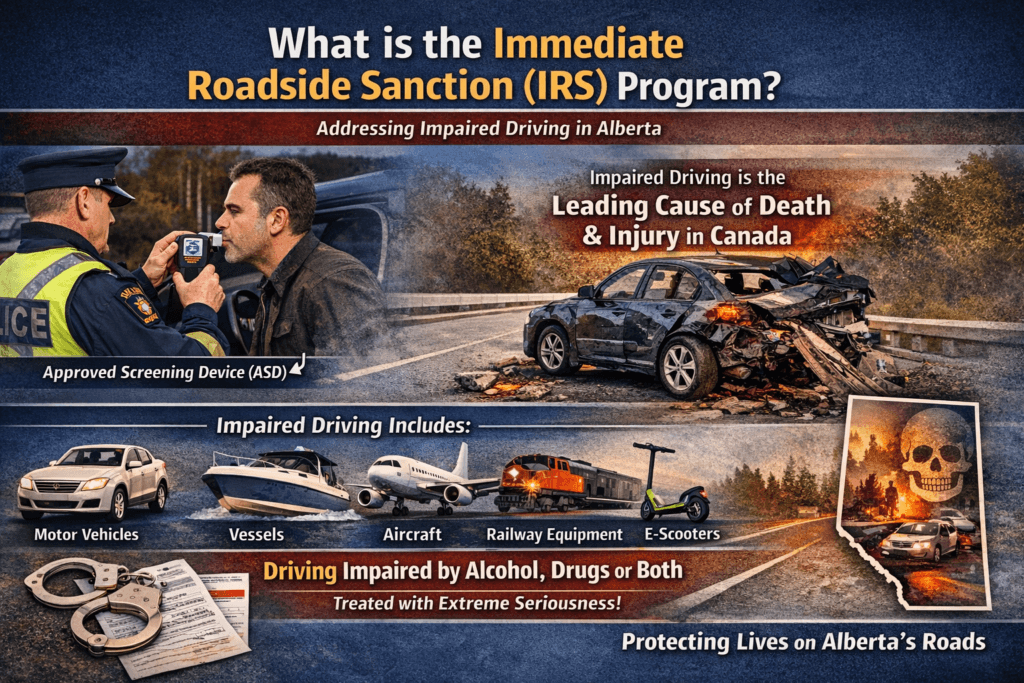
It is important to understand that impaired driving is the leading cause of death and injury in Canada, which is why both courts and prosecutors treat these cases with extreme seriousness. In Alberta, the law defines impaired driving as operating a “conveyance,” which includes motor vehicles, vessels, aircraft, railway equipment, and even electric scooters, while your ability to do so is impaired to any degree by alcohol, drugs, or a combination of both.
The Categories of IRS Sanctions
Alberta’s IRS framework includes distinct categories, each with different thresholds and penalties:
IRS: 24-Hour
This sanction applies when an officer reasonably suspects that a driver has consumed alcohol or drugs, or has a medical condition affecting their ability to drive safely. It requires the lowest threshold of evidence but results in the least severe penalty: a 24-hour licence and vehicle seizure.
IRS: ZERO – Novice
Novice drivers holding a Class 7 learner’s licence or Class 5-GDL licence face zero tolerance for any detectable alcohol or drugs. Any amount in their system can trigger penalties ranging from a 3-day suspension for a first offence to a 30-day suspension for subsequent offences.
IRS: ZERO – Commercial
Commercial drivers operating commercial vehicles are subject to zero tolerance for alcohol or drugs. The penalties mirror those for novice drivers, recognizing the heightened responsibility of operating large or commercial vehicles.
The Two Tiers of Sanctions: IRS WARN vs. IRS FAIL
The penalties you face under the IRS program depend on your blood alcohol concentration (BAC) or the nature of your interaction with the police.
IRS WARN Penalties
An IRS WARN is issued if a driver’s BAC is between 0.05 and 0.079, or if they fail a standardized field sobriety test. The penalties escalate based on how many times you have received a WARN in a two-year period:
- First Occurrence: A 3-day license suspension, 3-day vehicle seizure, and a $300 fine plus a 20% victim surcharge.
- Second Occurrence: A 15-day suspension, 7-day vehicle seizure, a $600 fine plus surcharge, and mandatory participation in the “Crossroads” remedial course.
- Third Occurrence: A 30-day suspension, 7-day vehicle seizure, a $1,200 fine plus surcharge, and mandatory participation in the “IMPACT” program.
IRS FAIL Penalties
An IRS FAIL is significantly more severe and is issued if your BAC is 0.08 or higher, if you refuse to provide a breath or drug sample, or if you fail a drug recognition evaluation. For a first-time FAIL occurrence, you face:
- An immediate 90-day license suspension.
- A 30-day vehicle seizure.
- A $1,000 fine plus a 20% victim surcharge.
- Mandatory impaired driving education (Planning Ahead course).
- A mandatory 12-month ignition interlock (blow box) requirement following the initial suspension.
Subsequent FAIL occurrences can lead to 36-month interlock requirements or even a lifetime driving suspension.
The Hidden Costs and Collateral Damage
The immediate fines are only the beginning of the financial burden. The “hidden” penalties associated with an IRS or a criminal impaired driving conviction can be devastating.
Vehicle Seizure Costs
Beyond the suspension, you are responsible for towing and impound fees for the 30-day seizure. Impound fees typically range from $30 to $60 per day, meaning storage alone can cost between $900 and $1,800.
Ignition Interlock Fees
Installing and maintaining a “blow box” is a costly endeavour. Furthermore, if you drive a company vehicle, you are prohibited from doing so unless your employer allows the device to be installed in their vehicle.

Catastrophic Insurance Hikes
Perhaps the most crippling long-term cost is the impact on auto insurance. Premiums can skyrocket by 200% to 400% or more for three to six years. This can result in an additional $20,000 to $50,000 in costs over that period.
Employment and Travel
A criminal record for impaired driving can prevent you from entering certain countries, such as the United States or Mexico. It can also create massive obstacles in retaining or obtaining employment, especially for positions of trust or those involving company vehicles.
The SafeRoads Alberta Review Process
When you receive a Notice of Administrative Penalty, the clock immediately starts ticking. You have exactly seven calendar days – not business days – from the date the notice was issued to file a request for review through SafeRoads Alberta. This deadline is absolute and unforgiving. Missing it means your suspension, vehicle seizure, and all associated penalties are automatically confirmed, regardless of how strong your case might be.
How the Review Process Works
SafeRoads Alberta is the independent administrative body responsible for reviewing IRS penalties. The process differs significantly from traditional criminal proceedings:
- Filing the Review Request: You must submit your review application through the SafeRoads Alberta online portal within the seven-day window. A filing fee is required.
- Disclosure Review: SafeRoads will provide disclosure, including the officer’s notes, breathalyzer maintenance records, and other relevant documentation. This is typically provided within 14 days.
- Preparing Your Case: You’ll need to gather supporting evidence, witness statements, medical documentation, or any other materials that support your defence.
- The Hearing: Reviews are typically conducted via video conference, though written submissions are also accepted. Unlike criminal proceedings, the officer who issued the sanction does not testify or face cross-examination. Instead, an adjudicator reviews the written evidence and submissions.
- The Decision: Decisions are usually rendered within 21 to 30 days of the hearing. If successful, your entire suspension and vehicle seizure are cancelled. If unsuccessful, all penalties remain in effect.
Important Restrictions on the Review Process
It’s essential to understand what SafeRoads reviews can and cannot do:
- The review is limited to specific grounds outlined in the SafeRoads Alberta Regulation
- The burden of proof rests on you to demonstrate why your IRS should be cancelled
- Officers cannot be cross-examined
- New evidence not available at the time of the stop may not be admissible
- The procedural protections of the criminal court do not apply
The Technical Nature of Impaired Driving Cases
Impaired driving charges are highly technical. Even if you “blew over,” you may not be found legally guilty if the police failed to follow proper protocols or infringed upon your rights under the Canadian Charter of Rights and Freedoms.
Common areas for legal challenge include:
- Breathalyzer Accuracy: Was the device calibrated correctly? Was the officer properly trained? Was the mouthpiece clean and unused?
- Procedural Errors: Did the officer file the correct paperwork within the time required by law?
- Charter Rights: Were you informed of your right to counsel immediately? Were you provided with a telephone as soon as possible?
The Power of a STAY
In the context of Alberta’s Immediate Roadside Sanction (IRS) program, a STAY represents a critical legal mechanism for drivers who have been unsuccessful in their initial administrative review. While the IRS program imposes immediate and harsh penalties, a STAY can provide essential relief during the subsequent statutory appeal process.
The Mechanism of a STAY
If your license suspension is upheld following a SafeRoads Alberta review, you have 30 days to file an appeal to the Court. A positive and powerful aspect of this statutory appeal is the ability to apply for a STAY of the driving suspension. If this application is successful, you can get your license back immediately, allowing you to legally drive until the court makes a final decision on your case.
Why the Power of a STAY is Essential in Alberta
The power of a STAY is particularly significant because of the unique geographical and climate challenges in the province. There are several reasons why regaining driving privileges during the appeal process is vital:
- Impracticality of Alternatives: In Alberta, relying on “alternative” transportation is often unrealistic due to the vast distances required for travel and the inhospitable weather.
- Preventing Financial Ruin: For many Albertans, the loss of a license can lead directly to financial ruin, as it often impacts their ability to maintain employment.
- Escaping Immediate Sanctions: A successful STAY halts the 90-day suspension and the subsequent 12-month mandatory ignition interlock (blow box) requirement while the legal battle continues.
Judicial Scrutiny and Strategy
When presiding over a STAY application or the eventual appeal hearing, a judge will scrutinize the previous administrative proceedings. Specifically, the Judge will examine whether the adjudicator’s decision to uphold the license suspension was reasonable and correct in law.

Experienced counsel like Rory Ziv leverages this phase to ensure that Charter rights are protected and that all procedural requirements, such as the timely provision of required disclosure, were strictly followed by the government and police. Because IRS penalties take effect the moment a driver is served, there are only 7 days to act initially, making the move toward a statutory appeal and a STAY a vital secondary line of defence for those whose licenses were not returned during the first review.
How Experienced DUI Lawyer Rory Ziv Can Help
If you’ve received an Immediate Roadside Sanction in Edmonton or anywhere in Alberta, every moment counts. The seven-day deadline to file a review is unforgiving, and the consequences of missing it can affect your life for months or even years. But you don’t have to face this alone. Edmonton Criminal Defence Lawyer Rory Ziv has the knowledge, experience, and dedication to fight for your rights. He understands the technical complexities of IRS defences, the SafeRoads review process, and how to identify and exploit weaknesses in the Crown’s case. More importantly, he understands that this isn’t just about administrative penalties, it’s about your livelihood, your freedom, and your future.
Don’t let the stress and confusion of an IRS overwhelm you. Don’t assume that nothing can be done. And most importantly, don’t miss your opportunity to fight back.
When you retain the Ziv Law Group, we:
- Analyze Paperwork: We ensure the police officer filed all necessary documents correctly and on time.
- Request Disclosure: We demand and review all government materials to find inconsistencies or errors.
- Protect Charter Rights: We investigate whether your constitutional rights were violated during the stop or arrest.
- Conduct the Hearing: We represent you at the SafeRoads Alberta hearing, whether it is conducted orally or in writing.
- Develop Strategy: We assess whether a constitutional challenge or a procedural motion is the best path to an acquittal or withdrawal of charges.
Your driving privileges, your employment, and your future are too important to leave to chance. Take the first step toward protecting them by contacting Edmonton Criminal Defence Lawyer Rory Ziv now.
Contact Edmonton Criminal Lawyer Rory Ziv Today

If you have received an IRS Notice of Administrative Penalty, the clock is ticking. Contact the Ziv Law Group immediately. We are committed to advocacy and results for every client. Call us 24/7: 780-429-4004 Toll Free: 1-833-429-4004
Frequently Asked Questions (FAQ)
Will an IRS give me a criminal record?
No, an IRS is an administrative penalty, not a criminal conviction. It will not appear on a criminal record check. However, it will appear on your driver’s abstract, which can affect insurance and employment. Additionally, police may still lay criminal charges separate from the IRS, which could result in a criminal record if you’re convicted.
How long does an IRS stay on my driving record?
IRS sanctions remain on your driver’s abstract and are considered when calculating penalties for subsequent offences. The specific duration depends on the type of sanction, but they can affect your record for several years.
Can I drive at all during an IRS: FAIL suspension?
During the initial 90-day absolute suspension, you cannot drive under any circumstances. After this period, you may participate in the Ignition Interlock Program, which allows you to drive vehicles equipped with an approved interlock device. If you choose not to participate in this program, your suspension continues.
What happens if I’m caught driving during a suspension?
Driving while suspended is a serious offence under the Traffic Safety Act and can result in additional fines, extended suspensions, vehicle seizure, and potential criminal charges. It can also impact any ongoing review of your IRS.
Can I get a review if I’ve already paid the fine?
No. Paying the fine constitutes acceptance of the penalty and eliminates your right to request a review. This is why it’s critical to consult with a lawyer before making any payments.
How much does it cost to hire a lawyer for an IRS review?
Legal fees vary depending on the complexity of the case. However, consider the cost of not fighting the sanction: months without driving privileges, thousands in fines and fees, dramatically increased insurance rates, and potential employment consequences. Most people find that investing in legal representation is far less expensive than accepting the penalties.
What’s the difference between an IRS and a criminal DUI charge?
An IRS is a provincial administrative penalty imposed under the Traffic Safety Act, while a DUI charge is a federal criminal offence under the Criminal Code of Canada. You can receive both for the same incident. The IRS takes effect immediately, while criminal charges proceed through the court system. An IRS doesn’t result in a criminal record, but a criminal conviction does.
If I win my IRS review, does that affect criminal charges?
The two proceedings are technically separate. However, a successful IRS review may provide valuable insights into weaknesses in the Crown’s case and can sometimes lead to criminal charges being withdrawn or reduced. This is why having a lawyer who handles both administrative and criminal proceedings is advantageous.
Can I request a review based on hardship?
SafeRoads reviews are based on specific legal grounds outlined in the regulation, not on hardship or inconvenience. However, the severe impact of a suspension on your employment or family situation underscores why it’s so important to explore all available legal defences with an experienced lawyer.
What evidence will SafeRoads Alberta provide?
SafeRoads is required to disclose the officer’s notes, breathalyzer maintenance records, calibration certificates, any video or audio recordings, and other relevant documentation. Your lawyer will review this disclosure carefully to identify any weaknesses or procedural errors.
Does my right to silence apply at the roadside?
You generally have a right not to provide information to police, with a few exceptions: you must provide your name, address, and birthdate if arrested, and you must provide your license if you are operating a motor vehicle. However, lying to the police is a criminal offence.
Can I get my license back early?
Generally, you must serve the full suspension and meet all reinstatement conditions, such as paying fines and finishing mandatory courses. However, successful appeals or participating in an ignition interlock program may allow you to regain some driving privileges sooner.
Disclaimer: This blog post is intended for informational purposes only and does not constitute legal advice. Every case is unique, and outcomes depend on specific facts and circumstances. For legal advice regarding your particular situation, please consult with a qualified criminal defence lawyer.